
Why TOURISM?
The United Nations Conference on Trade and Development (UNCTAD) during July 2017 released its Economic Development in Africa Report 2017: Tourism for Transformative and Inclusive Growth.
The report analysed Africa’s tourism sector at the continental, regional, and national levels, and found that tourism can enhance Africa’s development process by functioning as an engine for inclusive growth and economic development. [Source: Brookings Institute]
Consumer spending on tourism, hospitality, and recreation in Africa is projected to reach about $261.77 billion by 2030, $137.87 billion more than in 2015.

The World Bank
Tourism is a more efficient job creator than many other sector due to the downstream effects and tourism’s main comparative advantage is that visitor expenditure have a “flow-through” or catalytic effect across the economy.
[Source: World Bank report http://www.worldbank.org/afr/tourism]
The African Union and sub-regional communities have also put tourism at the top of their agendas. For example, the African Union has endorsed the continent’s Tourism Action Plan [TAP] developed by the New Partnership for Africa’s Development [AUDA].
The TAP recognises tourism development among priority sector strategies of AUDA across Africa and aims to make Africa the destination of the 21st century.
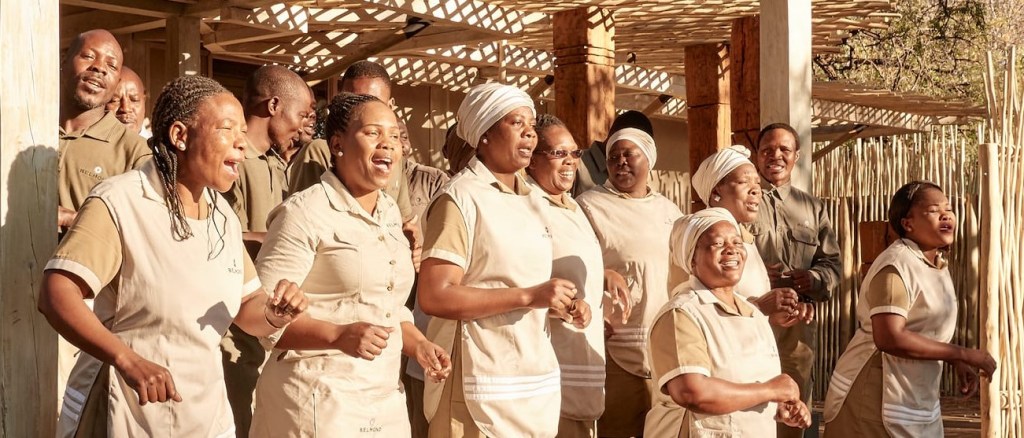
COMMUNITY INCLUSION & SDGs
INCLUSIVE TOURISM
Travel & Tourism can contribute positively to the communities upon which it depends, while protecting cultural, and natural heritage. [WTTC]
Surveys found that 68% of travellers want the money they spend on travel to go back into the local communities.
All Stakeholders can contemplate about how a Tourism Development can support the Local Businesses, and how they equally can support a Tourism Development.
DESTINATION STEWARDSHIP
Destination Stewardship is the description for the framework whereby the public sector, private sector, and the residents of local community are engaged jointly to preserve, protect, and benefit from visitors to their touristic destination. [GSTC]
Destination Stewardship Council (DSC)
DSC is a volunteer-driven non-profit organization dedicated to protecting the world’s distinctive places by supporting wisely managed tourism, and enlightened destination stewardship.
RESPONSIBLE TOURISM
Responsible Tourism was defined in Cape Town in 2002 alongside the World Summit on Sustainable Development.
Responsible Tourism definition, the Cape Town Declaration, is now widely accepted and has been adopted by the World Travel Market in 2007 for World Responsible Tourism Day.
Responsible Tourism is about using tourism to make better places for people to live in, and making better places for people to visit, in that order.
Responsible Tourism requires that tour operators, hoteliers, governments, local communities and tourists take responsibility, take action to make tourism more sustainable.
SUSTAINABLE TOURISM
Sustainable Tourism: Travel that offers unique experiences to the traveller while also protecting nature, culture, communities, history and the planet.

Global Sustainable Tourism Council (GSTC)
[https://www.gstcouncil.org/]
GSTC establishes and manages global sustainable standards, known as the GSTC Criteria.
GSTC is managing the GSTC Criteria, global standards for sustainable travel and tourism.
Also providing international accreditation for sustainable tourism Certification Bodies.

SUSTAINABLE TRAVEL INTERNATIONAL
[https://sustainabletravel.org/]
Taking on tourism’s most pressing and transformative impacts, and working towards a future where travel is beneficial for people and places around the world.
The Sustainable Travel & Tourism Partners (STTP) initiative aims to create a mass engagement around sustainability within the sector, by bringing together all Travel & Tourism companies that engage in significant sustainability efforts.
Sustainability is more than environmental management; it is also about economic progress and social development.
PILLARS OF SUSTAINABILITY – Sustainability focused on:
1] Reduction of greenhouse gases.
2] Preservation of local cultures.
3] Conservation of natural resources.
In terms of environmental consciousness, the interconnectedness of environmental and economic sustainability must also be understood.
4] Sustainable economy.
5] Creation of jobs.
6] Inclusive development (engages all strata of society).
7] Protecting the individual.
ECO-TOURISM
Eco-tourism: Tourism that has minimal impact on fragile natural environments and which focuses on providing nature-based experiences.
Tourism as a viable land use option that justifies wildlife conservation.
Some travellers will be more conscientious about how they travel and would like:
1] to minimize the carbon footprint of their journey, and
2] to make sure their presence is having a positive impact on their host destinations.
Eco-resorts can be a variety of accommodation types (e.g. tents, lodges, tree houses, individual structures, hotels etc.) with the intention and ethos to consider & protect the wellness of the entire environment (i.e. hotels with a conscience).
CONSERVATION & ECONOMIC RATIONALE
CONSERVATION CAN SUPPORT SELF-SUSTAINING ECONOMIES
In nature there are many examples of Self-sustaining Ecosystems.
Conservation is showing how Self-sustaining Micro-economies can be created.
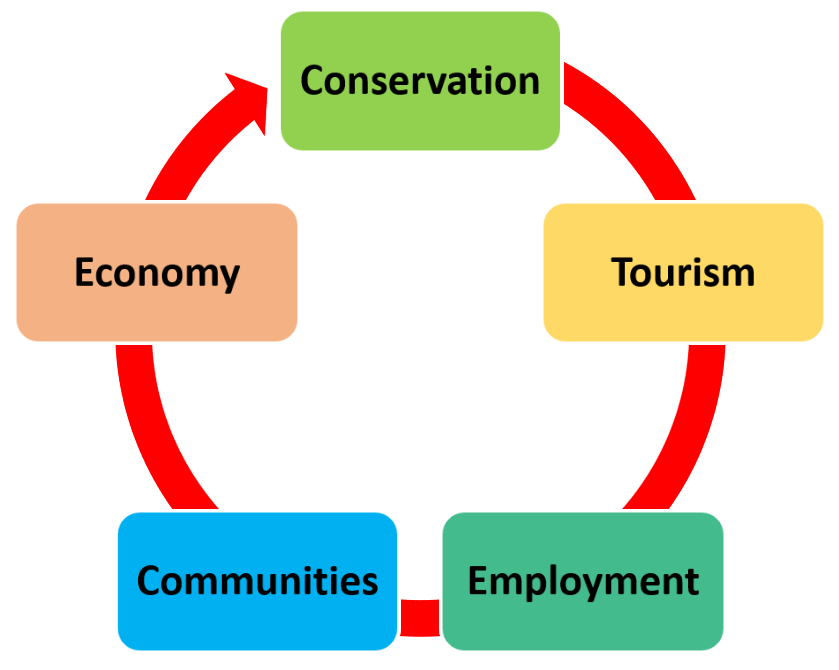
Conservation creates tourist attractions which create business opportunities, contributing to jobs and growing local and national economies.
WILDLIFE TOURISM
Wildlife Tourism provides close contact with wildlife and nature in general.
NATURE TOURISM
Responsible travel to natural areas, which conserves the environment, and improves the welfare of the local community.
ADVENTURE TOURISM
Adventure tourism: Tourism that usually (but certainly not always) takes place in wilderness environments.
CULTURE TOURISM
Cultural heritage is the legacy of physical artefacts and intangible attributes of a group or society that are inherited from past generations, maintained in the present and bestowed for the benefit of future generations.
IMPACT INVESTMENTS
Impact investment in the tourism sector should aim to incentivise local ownership, participation (direct, value chain etc.), and strong governance while delivering both conservation and sustainable business results.
Sustainable Investments in the Tourism Sector can be oriented towards mitigating Climate Change impacts.
In order to develop Financial Instruments for resilience & renewal of the Tourism sector, a paradigm shift is needed for the implementation of frameworks that can facilitate the transition from a Growth-paradigm to a long term Sustainable-paradigm.
SUSTAINABLE INVESTMENTS
An investment approach that considers social and environmental good as well as financial return.
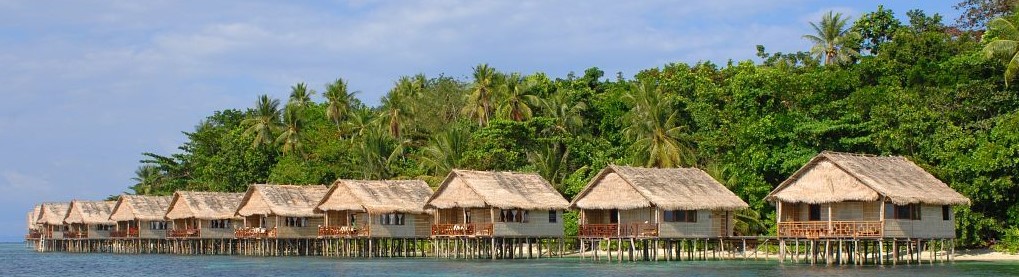
GLOBAL TOURISM
International tourist arrivals reached ±1.5 billion in 2019, and could be ±1.8 billion in 2030.
Spending by international tourists amounted to nearly US$1.6 trillion as of the end of 2019. [IMF]
Travel & Tourism contributed US$8.9 trillion to the world’s GDP [10.3% of global GDP].
330 Million jobs (1 in 10 jobs) around the world (providing critical jobs to youth & women) & 27 million Europeans worked in the travel & tourism sector (2019).
Travel & Tourism sector facilitates meaningful changes to the lives of the people and communities involved.
In additional to creating jobs, it also reduces poverty & inequality, and enriches communities both economically & socially.
Considering the high degree of informality in many TDCs (Tourism-dependent Countries), employment in the tourism sector is likely to be even higher than reported. [IMF]

COVID-19 GLOBAL ECONOMIC IMPACT
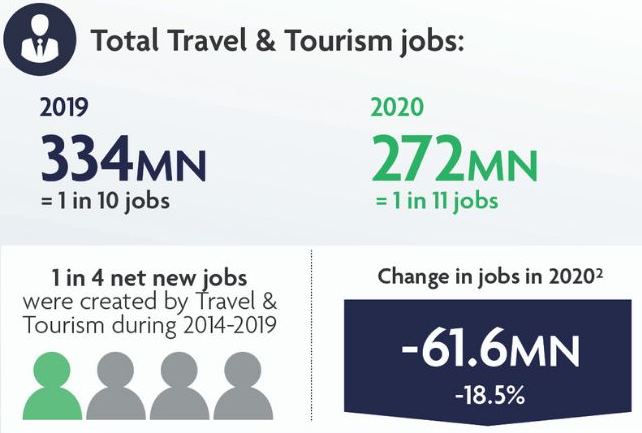
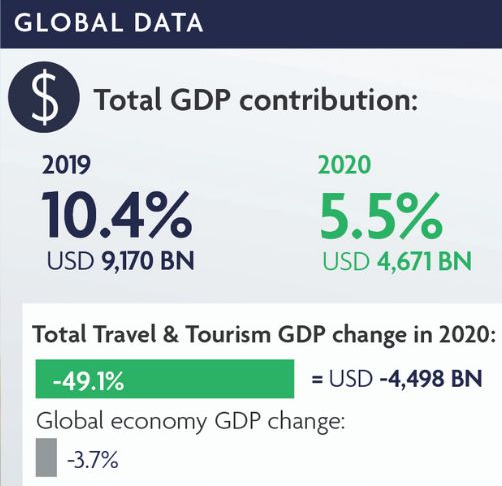
The devastating impact of COVID-19 on the global Travel & Tourism sector during the 2020 year, resulted in a massive US$4.5 trillion loss. [WTTC]
AFRICA TOURISM
UNWTO projected that Africa’s International Tourist Arrivals will reach 134 million in 2030.
Travel & Tourism sectors accounts approximately for ±23 million people (2018) working directly or indirectly for the tourism industry.
Direct employment in the tourism industry was 9.3 million (2018).
International Tourism Revenue in 2016 was $36.2 billion, and 63 million international visitors to Africa.
World Travel and Tourism Council [WTTC]; Tourism is expected to contribute $269 billion to the GDP of the Africa continent and create ±29 million new jobs by 2026.
Considering the Substantial Socio-economic Benefits associated with the Tourism Sector, numerous new sustainable tourism developments and new businesses can still be realised.

TOURISM IS ONE OF THE WORLD’S MOST IMPORTANT ECONOMIC SECTORS, Because it:
1] Employs 1 in every 10 people globally,
2] Provides livelihoods to hundreds of millions more,
3] Boost’s economies & enables countries to prosper,
4] Allows people to experience some of the world’s cultural & natural treasures,
5] Brings people closer to each other, &
6] Highlighting our common humanity.

Back to Home Page: Home
PROMINENT TOURISM DESTINATION COMPANIES

Abercrombie & Kent
[https://www.abercrombiekent.co.uk/]

Tourvest Destination Management
The Tourvest Destination Management Inbound Leisure division is the largest ground handler of foreign tourists to Africa.
[https://www.tourvestdm.com/]

Sense of Africa
The largest destination management company in the southern hemisphere.
[https://www.senseofafrica.com/]

GoVacation Africa
Is a full service destination management company in South Africa, Namibia, Tanzania, Kenya, and Zanzibar.
[https://www.go-vacation.co.za/]

Sense of Oceans
Is the most experienced, on-the-ground Mozambique tour operator, with an impressive offering across southern Africa.
[https://www.senseofoceans.com/]
FAMED SAFARI COMPANIES IN AFRICA
Africa Adventure Consultants
[adventuresinafrica.com]

African Travel Inc.
[africantravelinc.com]

Alluring Africa
[alluringafrica.com]

Deeper Africa
[deeperafrica.com]

Extraordinary Journeys
[extraordinaryjourneys.com]

Go2Africa
[go2africa.com]

Ker & Downey Africa
[ker-downeyafrica.com]

Micato Safaris
[micato.com]

Roar Africa
[roarafrica.com]

Rothschild Safaris
[rothschildsafaris.com]

Wilderness Safaris
[wilderness-safaris.com]
Back to Home Page: Home
 TIDiA - TOURISM & HOTEL DEVELOPMENTS & INVESTMENTS in AFRICA